26 Sept 2026 · Case #021
Ethylene glycol poisoning
This page works the case through in full, answer included. If you would rather reason it out yourself: Play this case
Diagnosis
Ethylene glycol poisoning
First-line treatment
Fomepizole with hemodialysis
How the diagnosis is reached
Two gaps opening at once is the finding that matters. A high anion gap acidosis alone has a long differential and a raised osmolar gap alone means little, but together they say a toxic alcohol was swallowed and is partway through being metabolised: the parent alcohol is osmotically active and widens the osmolar gap early, while its acid metabolites widen the anion gap as metabolism proceeds. Appearing drunk with no smell of alcohol fits, and the empty container beside him supplies the rest. Negative ketones, a normal glucose, undetectable ethanol and salicylate, and only a modest lactate close off the other common causes of an acidosis this severe. What distinguishes ethylene glycol from methanol at the bedside is the target organ: methanol is metabolised to formic acid, which injures the optic nerve and produces the characteristic 'snowstorm' visual blurring, whereas this patient has entirely normal vision. Ethylene glycol is instead metabolised through glycolic acid to oxalic acid, which chelates calcium: producing the hypocalcemia, the prolonged QT interval, and calcium oxalate crystals that precipitate in the renal tubules and cause the acute kidney injury seen here. Treatment is directed at blocking metabolism rather than removing the parent compound: fomepizole inhibits alcohol dehydrogenase with far greater affinity than ethanol and without the sedation of an ethanol infusion, preventing formation of the toxic metabolites. Hemodialysis is added when there is severe acidosis, renal failure, or a high measured level, since it clears both the parent alcohol and the acid metabolites. Bicarbonate only buys time and does nothing about ongoing metabolite production, while thiamine and pyridoxine are given as cofactors to shunt what is already circulating away from oxalate.
Key clinical clues
- Apparent intoxication with ataxia and nystagmus but no smell of alcohol
- Severe high anion gap metabolic acidosis with a simultaneously raised osmolar gap
- Negative ketones, undetectable ethanol and salicylate, only mildly raised lactate
- Normal vision throughout, argues against methanol and its optic nerve injury
- Hypocalcemia, prolonged QT and birefringent calcium oxalate crystals with acute kidney injury
The case in full
Presenting complaint
Patient history
A 51-year-old man is found on his garage floor, confused and unsteady, last seen well eight hours earlier. He seems intoxicated (slurred speech, ataxia, nystagmus) but there is no smell of alcohol. An empty container lies beside him.
Observations and examination
Vital signs
He is breathing deeply and rapidly with a regular, laboured pattern. Pupils are equal and reactive, and he reports no visual disturbance when asked; he says he can see the clock on the wall clearly. There are no focal neurological deficits and no signs of head injury.
| Parameter | Value | Reference |
|---|---|---|
| Glasgow Coma Scale | 12Ref 15 | 15 |
| Respiratory rate | 34, deep /minRef 12–20 | 12–20 |
| Heart rate | 112 bpmRef 60–100 | 60–100 |
| Blood pressure | 106/64 mmHg | – |
| Temperature | 36.2 °CRef 36.1–37.5 | 36.1–37.5 |
| Capillary glucose | 104 mg/dLRef 70–110 | 70–110 |
Arterial blood gas
Laboratory results
An arterial sample is taken immediately given his respiratory pattern.
| Parameter | Value | Reference |
|---|---|---|
| pH | 7.09Ref 7.35–7.45 | 7.35–7.45 |
| Bicarbonate | 6 mmol/LRef 22–28 | 22–28 |
| pCO₂ | 18 mmHgRef 35–45 | 35–45 |
| pO₂ | 108 mmHgRef 80–100 | 80–100 |
| Base excess | −22 mmol/LRef −2 to +2 | −2 to +2 |
Chemistry, gaps and toxicology screen
Laboratory results
Electrolytes are sent alongside a measured serum osmolality and a broad toxicology screen.
| Parameter | Value | Reference |
|---|---|---|
| Sodium | 140 mmol/LRef 135–145 | 135–145 |
| Chloride | 102 mmol/LRef 98–107 | 98–107 |
| Anion gap | 32 mmol/LRef 8–12 | 8–12 |
| Measured osmolality | 342 mOsm/kgRef 275–295 | 275–295 |
| Osmolar gap | 44 mOsm/kgRef <10 | <10 |
| Lactate | 2.8 mmol/LRef 0.5–2.2 | 0.5–2.2 |
| Serum ketones | NegativeRef Negative | Negative |
| Ethanol / salicylate | UndetectableRef Undetectable | Undetectable |
Renal function and urinalysis
Laboratory results
Renal function is checked and a fresh urine sample is examined under the microscope.
| Parameter | Value | Reference |
|---|---|---|
| Creatinine | 2.1 mg/dLRef 0.7–1.3 | 0.7–1.3 |
| Corrected calcium | 7.4 mg/dLRef 8.5–10.2 | 8.5–10.2 |
| Urine crystals | Present, see imageRef None | None |
| Urine blood | 1+Ref Negative | Negative |
| Urine output (2 h) | 40 mLRef >100 | >100 |
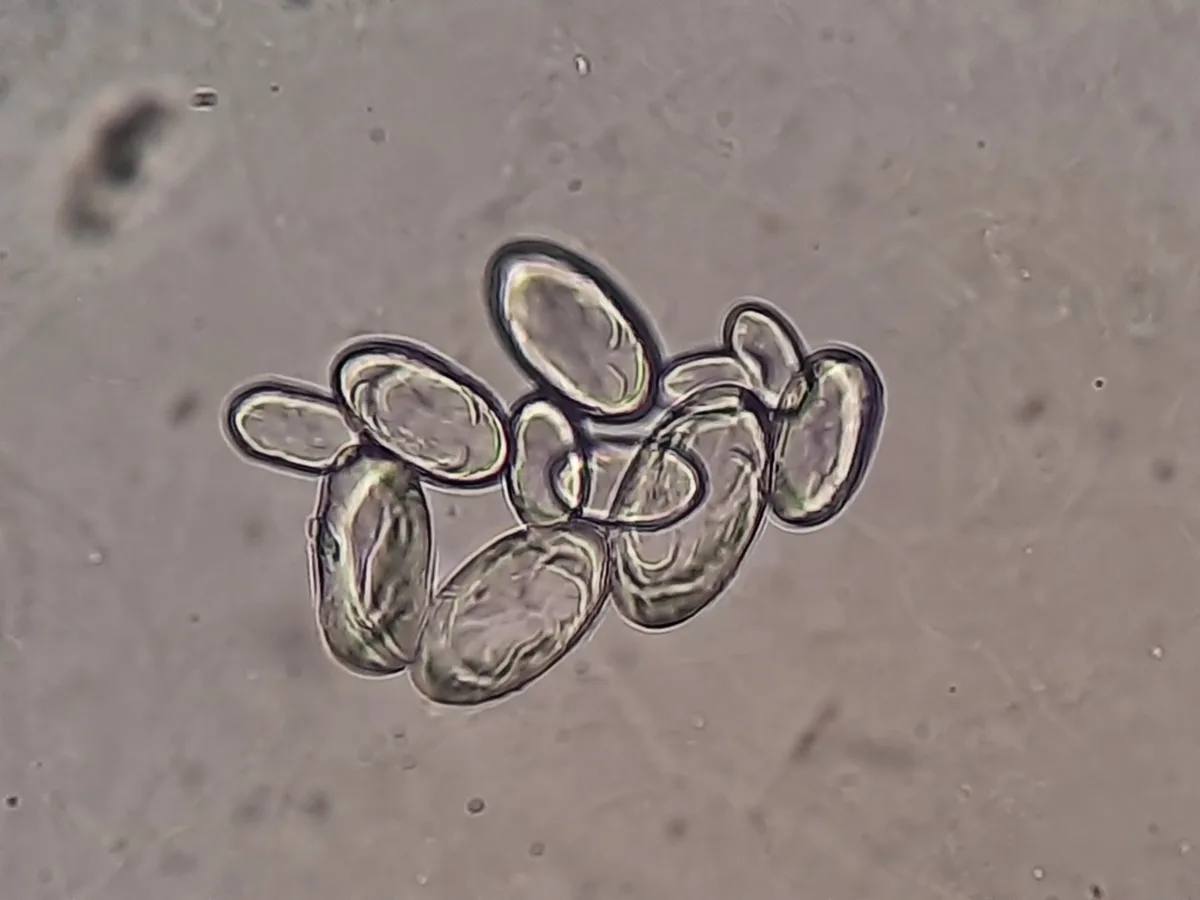
Urine sediment, brightfield microscopy.
Image by Ajay Kumar Chaurasiya, via Wikimedia Commons. Licence: CC BY-SA 4.0.
Clinical course
Clinical course
An ECG shows a prolonged QTc of 496 ms. Two ampoules of intravenous sodium bicarbonate are given and the arterial gas is repeated hourly. He continues to deny any visual symptoms, and formal bedside acuity testing is normal in both eyes.